Pay in installments of $6.18 with
 ,
,
 and
and

Shipping Estimate
USA
- USA
- CAN
- USA
- CAN
Ships within 48 hours · Estimated delivery Jun 28 - Jul 3
 Promo Codes Available:
For Your Every Summer RSVP, with Code: SUMMER15
Description
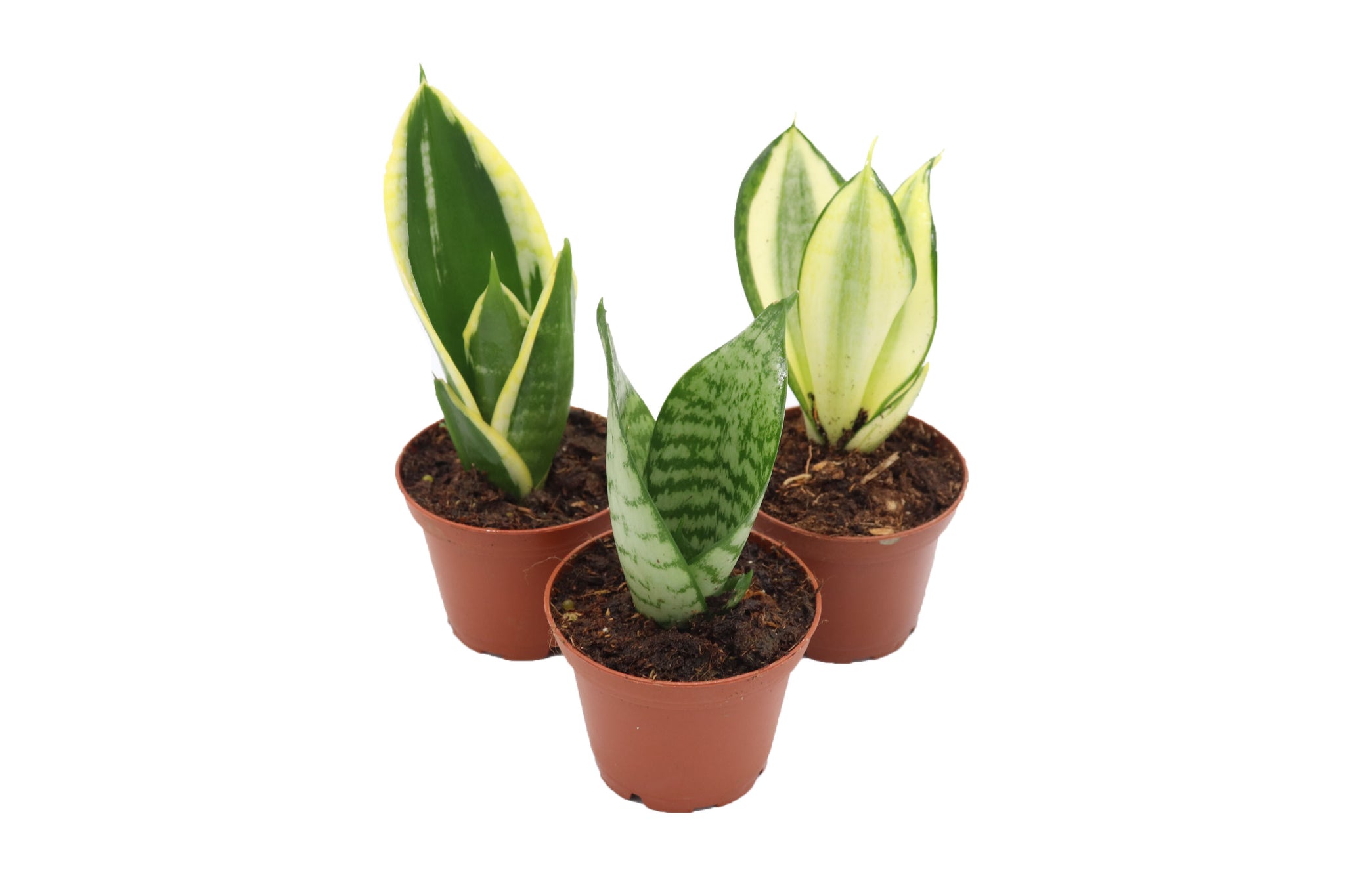
is snake plant succulent Mini Snake Plant Assortment – California TropicalsThis listing includes three assorted snake plant varieties, each in a 2. 5 inch grower's pot. Snake plants (Sansevieria trifasciata) are popular houseplants known for their easy care and air purifying qualities. Here are some care guidelines for snake plants: Light: Snake plants are quite adaptable to different light conditions. They can thrive in low to bright indirect light. They will do best in bright, indirect light but can also tolerate low
This listing includes three assorted snake plant varieties, each in a 2.5-inch grower's pot.
Snake plants (Sansevieria trifasciata) are popular houseplants known for their easy care and air-purifying qualities. Here are some care guidelines for snake plants:
-
Light:
- Snake plants are quite adaptable to different light conditions. They can thrive in low to bright indirect light. They will do best in bright, indirect light but can also tolerate low light.
-
Watering:
- Snake plants are drought-tolerant and prefer to dry out between waterings. Water them sparingly, allowing the top 1-2 inches of soil to dry before watering. Overwatering can lead to root rot, so it's better to err on the side of underwatering.
-
Soil:
- Well-draining soil is crucial for snake plants. A cactus or succulent mix works well, or you can amend regular potting soil with perlite or sand to improve drainage.
-
Temperature and Humidity:
- Snake plants prefer normal room temperatures between 70-90°F (21-32°C). They can tolerate slightly cooler temperatures, but avoid exposing them to frost.
- They are also adaptable to typical indoor humidity levels, so additional humidity is generally not necessary.
-
Fertilizing:
- Feed your snake plant sparingly. During the growing season (spring and summer), you can use a balanced liquid houseplant fertilizer diluted to half the recommended strength. Fertilize every 4-6 weeks. Reduce or stop feeding during the dormant winter months.
-
Potting:
- Repot your snake plant when it becomes root-bound, typically every 2-3 years. Choose a slightly larger pot with good drainage. Spring or early summer is the best time for repotting.
-
Pruning and Maintenance:
- Snake plants are relatively low-maintenance and don't require much pruning. You can remove any dead or yellowing leaves to maintain their appearance. Use clean, sharp scissors or pruning shears.
-
Pest Control:
- Snake plants are generally resistant to most pests, but occasionally, they can be affected by mealybugs or spider mites. If you notice pests, remove them with a damp cloth or treat the plant with insecticidal soap.
-
Propagation:
- You can propagate snake plants by dividing the rhizomes or by leaf cuttings. Divide the plant when repotting, ensuring each division has a healthy root system. Leaf cuttings can be rooted in soil or water.
-
Low Light Tolerance:
- Snake plants are great choices for low-light environments but grow more slowly in such conditions. If you want them to thrive, provide some indirect or filtered light.
Shipping Notes
- Free Standard Shipping on $100+ Orders to the USA.
- Except Preorder products are shipped in 48 hours.
- Delivery to the USA:
- Standard Shipping : 3-10 business days
- If time is of the essence, please consider selecting expedited delivery for faster service.
Exchange/Return Notes
- We offer a 30-day return/exchange service after receiving.
- Final sale items are not eligible for returns or exchanges.
- To process your return/exchange, please contact us at [email protected]
- Please click here for more details>>> Return & Exchange Policy