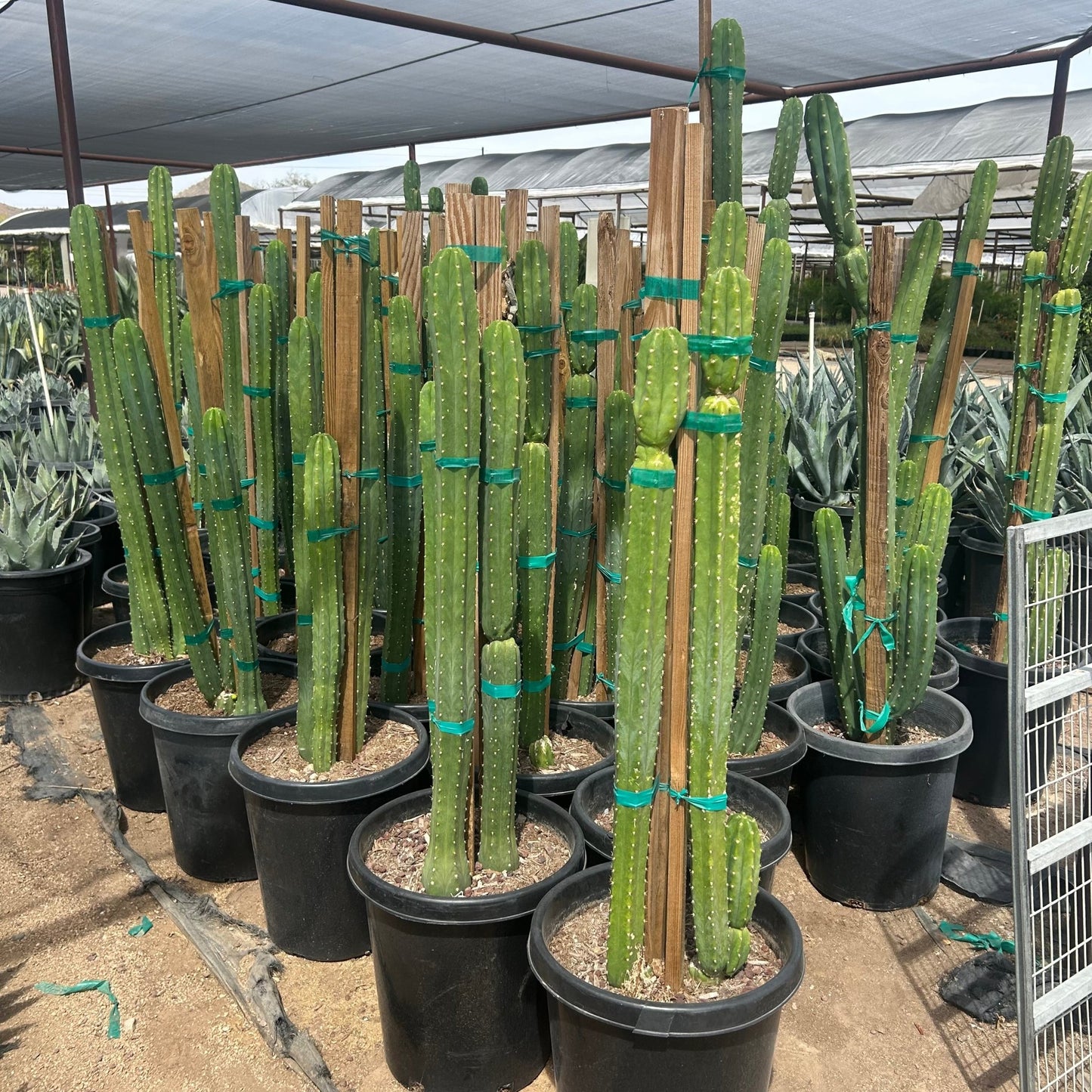
how much san pedro cactus to trip Buy San Pedro Cactus Phoenix, AZ | Echinopsis pachanoi
SKU: 54043661970
how much san pedro cactus to trip

how much san pedro cactus to trip Buy San Pedro Cactus Phoenix, AZ | Echinopsis pachanoi

Sale price$19.70 Regular price$21.89
Save 10%

Pay in installments of $5.47 with ShopPay, AfterPay and Klarna

Shipping Estimate
USA
  • USA
  • CAN

Ships within 48 hours · Estimated delivery Jun 28 - Jul 3

Promo Codes Available:

For Your Every Summer RSVP, with Code: SUMMER15

Description

how much san pedro cactus to trip Buy San Pedro Cactus Phoenix, AZ | Echinopsis pachanoiA Towering Columnar Cactus for Phoenix Desert Gardens San Pedro The San Pedro Cactus (Echinopsis pachanoi) is one of the fastest growing columnar cacti available for Phoenix landscapes. Native to the Andes Mountains, this striking blue green cactus grows tall, ribbed columns that branch with age into dramatic multi stemmed specimens. San Pedro can reach 1020 feet tall in the Phoenix Valley, adding bold vertical structure to xeriscape gardens,

A Towering Columnar Cactus for Phoenix Desert Gardens — San Pedro

The San Pedro Cactus (Echinopsis pachanoi) is one of the fastest-growing columnar cacti available for Phoenix landscapes. Native to the Andes Mountains, this striking blue-green cactus grows tall, ribbed columns that branch with age into dramatic multi-stemmed specimens. San Pedro can reach 10–20 feet tall in the Phoenix Valley, adding bold vertical structure to xeriscape gardens, courtyard plantings, and modern desert designs. It produces spectacular large white flowers that bloom at night during summer — a rare treat for any garden. Whether you’re creating a sculptural cactus garden in Scottsdale, anchoring a Chandler desert border, or adding architectural drama to a Mesa backyard — San Pedro delivers fast growth and jaw-dropping form.

San Pedro Cactus Plant Details

Attribute Detail
Scientific Name Echinopsis pachanoi (syn. Trichocereus pachanoi)
Common Names San Pedro Cactus, Saint Peter Cactus
Mature Height 10–20 feet
Mature Width 4–6 feet (multi-branched clump)
Growth Rate Fast for a cactus — 1–2 feet per year in Phoenix
Sun Full sun to light shade. Handles reflected heat well.
Water Low once established. Drought-tolerant but appreciates occasional deep watering.
USDA Zones 9–11 (Phoenix is Zone 9b–10a)
Soil Well-draining required. Thrives in sandy, rocky Arizona soils and handles caliche with drainage.
Foliage Evergreen — blue-green ribbed columns year-round
Bloom Large white nocturnal flowers in summer — fragrant and spectacular

San Pedro Cactus Uses in Phoenix Landscapes

Sculptural Focal Point & Cactus Gardens

San Pedro’s tall, ribbed columns create dramatic vertical architecture in any desert garden. Plant a single specimen as a living sculpture in a Scottsdale courtyard, or group 3–5 for a columnar cactus grove effect. Pair with Golden Barrel, Totem Pole Cactus, and Mexican Fencepost for an all-columnar desert statement garden.

Modern Desert Borders & Property Screens

Because San Pedro branches and fills in with age, it makes an effective living screen or border plant. Space 3–4 feet apart along a Chandler property line or Gilbert fence to create a striking green wall. The columns grow fast enough to provide meaningful screening within 3–5 years.

Pool-Friendly & Low-Litter Plantings

San Pedro is an excellent pool-adjacent plant — it produces virtually no leaf litter, requires minimal trimming, and its smooth columns and minimal spines make it safer than many cacti. Plant along Tempe and Mesa pool perimeters for a clean, architectural look with zero maintenance debris.

Best Time to Plant San Pedro Cactus in Phoenix

Spring (March–May) is the ideal planting window. Warm soil and rising temperatures promote fast root establishment and active growth. Fall (October–November) is the second-best option. Avoid planting in winter — San Pedro is slightly frost-sensitive and roots best in warm soil.

How to Plant San Pedro Cactus

  1. Dig wide, not deep — excavate 2x the root ball width at the same depth. Cacti have shallow root systems.
  2. Ensure excellent drainage — break through any caliche layer. San Pedro will rot in standing water.
  3. Backfill with native soil — no amendments needed. Sandy, rocky Arizona soil is ideal.
  4. Spacing — 3–4 feet apart for a border or screen; 5+ feet for standalone specimens.
  5. Let the cut callus — if transplanting a cutting, let the cut end dry and callus for 1–2 weeks before planting.
  6. Gravel mulch — 2–3 inches of decomposed granite or gravel. Never use organic mulch that retains moisture.

Watering San Pedro Cactus in Phoenix

First Year Watering Schedule

  • Weeks 1–2: Every 5–7 days, light watering to settle soil
  • Months 1–2: Every 7–10 days
  • Months 3–6: Every 10–14 days
  • After Year 1: Every 2–3 weeks in summer; monthly or less in winter

Drip Irrigation

Place 1 emitter (1–2 GPH) 12–18 inches from the base. San Pedro appreciates more water than most columnar cacti, which helps it maintain its fast growth rate. However, always let the soil dry completely between waterings. Overwatering causes root rot.

How fast does San Pedro grow in Phoenix?
San Pedro is one of the fastest-growing columnar cacti, adding 1–2 feet per year in Phoenix with regular summer watering. A 5-gallon plant can reach 6–8 feet within 3–4 years.

Is San Pedro frost-hardy in Phoenix?
San Pedro handles most Phoenix winters well, tolerating temps down to about 25°F. During rare hard freezes, drape frost cloth over the plant. Established specimens are more cold-hardy than young ones.

Does San Pedro bloom?
Yes — mature San Pedro cacti produce large, spectacular white flowers that open at night during summer. The blooms are fragrant and typically last one night, attracting moths and bats. Plants usually begin blooming once they reach 4–6 feet tall.

How does San Pedro compare to Totem Pole Cactus?
Both are tall columnar cacti, but San Pedro has visible ribs and small spines, while Totem Pole (Pachycereus schottii ‘Monstrosus’) is smooth and spineless with a knobby texture. San Pedro grows faster and produces showy flowers. Both are excellent choices for Phoenix desert gardens.

You May Also Like

  • Totem Pole Cactus — a smooth, spineless columnar cactus with a unique sculptural form.
  • Mexican Fence Post — a tall, columnar cactus often used as a living fence in desert landscapes.
  • Golden Barrel Cactus — a round, golden-spined cactus that contrasts beautifully with tall columnar species.
  • Ocotillo — a spindly desert native with fiery red spring blooms, perfect for adding movement to cactus gardens.

How Many San Pedro Cactus Do I Need?

San Pedro works two ways: as a single sculptural specimen, or branched together into a fast-growing columnar screen. For a focal point, plant one and give it 5 to 6 feet of clear space so the multi-stemmed form can spread. For a living screen along a wall or property line, space the columns 3 to 4 feet apart:

Run length Plants at 3.5 ft spacing
10 ft 3 plants
20 ft 6 plants
30 ft 9 plants
40 ft 11 plants

For a grove effect, group 3 to 5 columns in odd numbers, each 3 to 4 feet apart, so the ribbed stems read as one bold cluster.

San Pedro Cactus Season-by-Season in Phoenix

  • Spring (Feb-Apr): Prime planting window. Warm soil drives fast root establishment and the first flush of new column growth.
  • Summer (May-Sep): Peak growth season, adding 1 to 2 feet with regular deep watering. Large fragrant white flowers open at night and draw moths and bats. Handles full reflected heat off walls and pavement.
  • Fall (Oct-Nov): Second-best planting window and continued growth before cooling. Taper watering as temperatures drop.
  • Winter (Dec-Jan): Evergreen blue-green structure holds all winter. Hardy to about 25°F: during a hard freeze, drape frost cloth over the columns, especially on young plants.

At a Glance

✔ Heat-Loving (Reflected-Heat Tolerant)   ✔ Drought-Tolerant   ✔ Pollinator-Friendly   ✔ Pool-Friendly (Low-Litter)   ✔ Evergreen   ✔ Low-Maintenance   ✔ Deer & Rabbit-Resistant   ✔ Cold-Hardy to 25°F

Plant It With

Is San Pedro Cactus Right for Your Yard?

San Pedro thrives in full sun to light shade with fast-draining soil, and it tolerates reflected heat off walls and pavement better than most columnar cacti. Give it room to branch and break through any caliche layer so water never pools at the roots. It is not a fit if your spot stays wet or shaded, or if you cannot cover it during a rare hard freeze while it is young.

Shipping Notes
  • Free Standard Shipping on $100+ Orders to the USA.
  • Except Preorder products are shipped in 48 hours.
  • Delivery to the USA:
  1. Standard Shipping : 3-10 business days
  • If time is of the essence, please consider selecting expedited delivery for faster service.
Exchange/Return Notes
  • We offer a 30-day return/exchange service after receiving.
  • Final sale items are not eligible for returns or exchanges.
  • To process your return/exchange, please contact us at [email protected]
  • Please click here for more details>>> Return & Exchange Policy
SKU: 54043661970

Discover Niche Categories That Outsell how much san pedro cactus to trip

Top-Converting Item to Boost Your Average Order

4.7 ★★★★★
Based on 218 reviews
Sort
Highest Rating
Newest First
Oldest First
Product Reviews
D
Verified Purchase
D. Clair Davis
Pawtucket, US
★★★★★ 5
” Not so long ago we were sure that such an amazing and beautiful reality must be way off in the ...
Format: Paperback
Eclectic Living? How are you relating right now to Jesus? Did you see the “you” and the “right now?” We’re all different and in different places in our lives, also in the ways we turn to Jesus and trust him. The gospel of Jesus is rich and varied, with so many facets meeting us in our so multiple needs. We have been thinking about our “union with Christ.” Not so long ago we were sure that such an amazing and beautiful reality must be way off in the future, at the end of the chain of our “way of salvation,” the ordo salutis. When we go to heaven without any remaining sin, then we’ll see how all Jesus has done for us comes together, that was how we used to think. Then John Murray and others began to show us how union isn’t at the far end but at the very beginning of new life in Jesus. That means that our forgiveness/justification and our godly growth/sanctification belong together, both gifts from the Jesus to whom we belong. For people who know our theological history that could be alarming though. Wasn’t that what the Reformation 500 years ago was all about? Before, people thought that the main thing was to do the best you can, and then it could be maybe that God would answer that with forgiveness and blessing. But how can you tell when you’re doing enough? The more spiritually alert you were, the less sure. Then came Martin Luther and that breakthrough insight: yes the Lord is holy and you aren’t, but Jesus is! It’s his righteousness that he gives you, and now you can be confident that God is on your side, that when things go wrong it isn’t because he’s mad at you, but probably he’s giving you some kind of “fatherly chastisement.” Isn’t that wonderful, that firm foundation of the Lord’s unfailing love for you! Being totally sure that what we so desperately need right now is right there in the gospel. Isn’t that all we’ll ever need? In some ways it is, but aren’t we still supposed to grow in our godliness? We’re called to love the Lord with all our hearts and our neighbors as ourselves—now that’s not easy, is it? Luther gave us a real start, but we have to add that now we give our hearts to respond to our Lord’s love with whole-hearted life-changing obedience, right? Lutherans tend to want to stick with #1, forgiveness, and we Reformed want the bigger package. But to do that means work, putting together the loving presence of your Jesus and doing those hard things in your life. That’s the history, but where are we right now? Way back when I became a believer, it was about “what if you were to die tonight?” That is, in the next six hours how much change can you pull off? Not much, so dying tonight was totally about forgiveness. Back then there was also a lot of teaching about the end of the world and the suffering that would happen then. Most believed Jesus would take us out of that before it got too bad. Interesting, but what if we haven’t arrived yet at the end? So our combo of “tonight” and “sometime way off,” wasn’t much for “what if I have to get up tomorrow morning,” which so far is what life is about. Sure, people became believers, and were decent afterwards. But did the Jesus gospel really have much to do with their lives? Even if they did their thing and read the Bible every day? Friend Rosemarie tells the world that I have “an eclectic fashion statement.” I really like my bright pink shirt and also my Navaho green bola—so I wear them together. If each is great, then together they have to be stunning, right? Well, they do leave people stunned, eclectically. So here’s a remarkable Biblical doctrine, say justification, and here’s someone struggling with loneliness. Justification has to be the answer, right? Both are important, so don’t they have to fit? Bone up on justification and watch what happens: not much. Loneliness is a lot about not having a clue about relating to people, how does you forgiveness fit that? Eclectic? John Leonard’s Get Real helps. When you’re getting to know a not-yet-believer, what do you talk about? Here’s John’s profound answer: it depends! It depends on what’s so hard for him, you learn that by Listening! Then you bring a piece of the gospel to him, one of the “many facets of the gospel!” That is, something out of your own hard life and how the Lord has been blessing you through it, from some part of what Jesus has done for you. I don’t believe John tells us how many facets there are, he’s still collecting them. John is mostly about not-yets. Now comes David Powlison’s How Does Sanctification Work? He’s about “you, yourself and I.” What’s so hard for you right now? Where is that piece of the Bible that helps you understand and go on to live? Look hard for it, don’t be satisfied with eclectic. That’s going to take prayer and trust in Jesus. Jack Miller taught us to have prayer answered right away: Lord, show me my sin. Now add a David one: show me where I am and how Jesus is there for me. Justification may not be it, don’t look for a cure-all, see how the Lord came in the Bible to people with different lives and gave them exactly what they needed. Talk to other believers too. I’m glad that biblical counseling came along, people and Bible together, Jay! I’m glad that urban ministry also arrived, now we can learn how to think like a missionary by going only a few miles: see how people different from you are blessed through the gospel in ways you never knew; Harvie! Manny! (Underneath all that comes from seeing the culture under the Bible, how it meets people in that mindset or mess or foolishness. Thank you Meredith Kline, Ray Dillard, Dan McCartney and Doug Green). Can we count on preachers to model that for us: they know where their people are, don’t they? They can’t preach to fit all those needs at once, but wouldn’t it work to show the basic How? We all can do better with giving them feedback, right? Those liberals just about invented Eclectic, they could see some need and make up a story about it, not bothering with the Bible. We have to watch that we’re not doing Eclectic the other way around though, doing the Bible right and mumbling about how it works. That’s why the Lord has raised up those questioning millennials for us, making clear that what we’re doing so far isn’t much help. As usual I’m better at spotting the problem than giving the answer. But at least I can give you the beginning: read David’s book!
WAS THIS REVIEW HELPFUL?YesReportShare
Reviewed in the United States on June 12, 2017
J
Verified Purchase
Joy S Frady
Port Orchard, US
★★★★★ 5
Great Little Book
Format: Paperback
The title of this book purports to explain to us how sanctification works in the life of a believer. Most people, in American culture at least, will look at this title and expect something of a "how-to" book, filled with bullet points and flowcharts and methods. But Powlison surprises readers by not pinpointing one way of sanctification or one method of growth in holiness but providing instead a broad range of ways God works to grow us into Christlikeness. Powlison is at his best here: succinct, personal, practical and powerful. This book is written as a counter to the "one way of sanctification" teaching we sometimes hear today. For example, some teach all we need to do to be sanctified is to focus on the gospel, rehearse it to ourselves, remember it. Others teach that sanctification comes through spiritual disciplines. But Powlison says there are a variety of ways God changes us and we need them all at different times. Powlison's teaching about Truth Unbalanced and Rebalanced in chapter 3 is worth the price of the book alone. God blessed me through this book. Thank you David Powlison for sharing God's sanctifying work in your life with us.
WAS THIS REVIEW HELPFUL?YesReportShare
Reviewed in the United States on June 18, 2017
A
Verified Purchase
Amazon Customer
Louisville, US
★★★★★ 4
Well Written
Format: Paperback
A personal account of the author’s suffering paired with other important experiences and Biblical truths. Theologically sound and a quick read. It was not what I was looking for but it was well written, nonetheless.
WAS THIS REVIEW HELPFUL?YesReportShare
Reviewed in the United States on July 18, 2022
D
Verified Purchase
Danny Gallivan
Boise, US
★★★★★ 5
Good condition
Format: Paperback
Great item, great content!
WAS THIS REVIEW HELPFUL?YesReportShare
Reviewed in the United States on March 31, 2026
J
Verified Purchase
Jacob
Carnegie, US
★★★★★ 5
Wonderful Little Book
Format: Paperback
I actually really love this book. It's short and to the point which takes away a little bit of the theological clutter that you can find in a text book which does limit its content. However, the few points it addresses, lovingly points out incredible truth that we need to hear when helping others, and provides stories which demonstrates his point. The most important passage, in my opinion is, "Ministry 'unbalances' truth for the sake of relevance; theology 'rebalances' truth for the sake of comprehensiveness." (pg.33) Sometimes we want to help people with phrases like, "the lord gives and the lord takes away" or "rejoice always" which is a true fact but could be a dagger in the heart of someone who just lost a wife/husband/child and is breaking down. Either of those statements could calm someone with grief but could also cause anger and bitterness. Some truth can provide immense hope to those in need, but not all truths will help each person the same way and they might respond poorly in a situation of pain. We do a disservice when we assume that all people need the same answers in the same way.
WAS THIS REVIEW HELPFUL?YesReportShare
Reviewed in the United States on September 23, 2017

recommand products