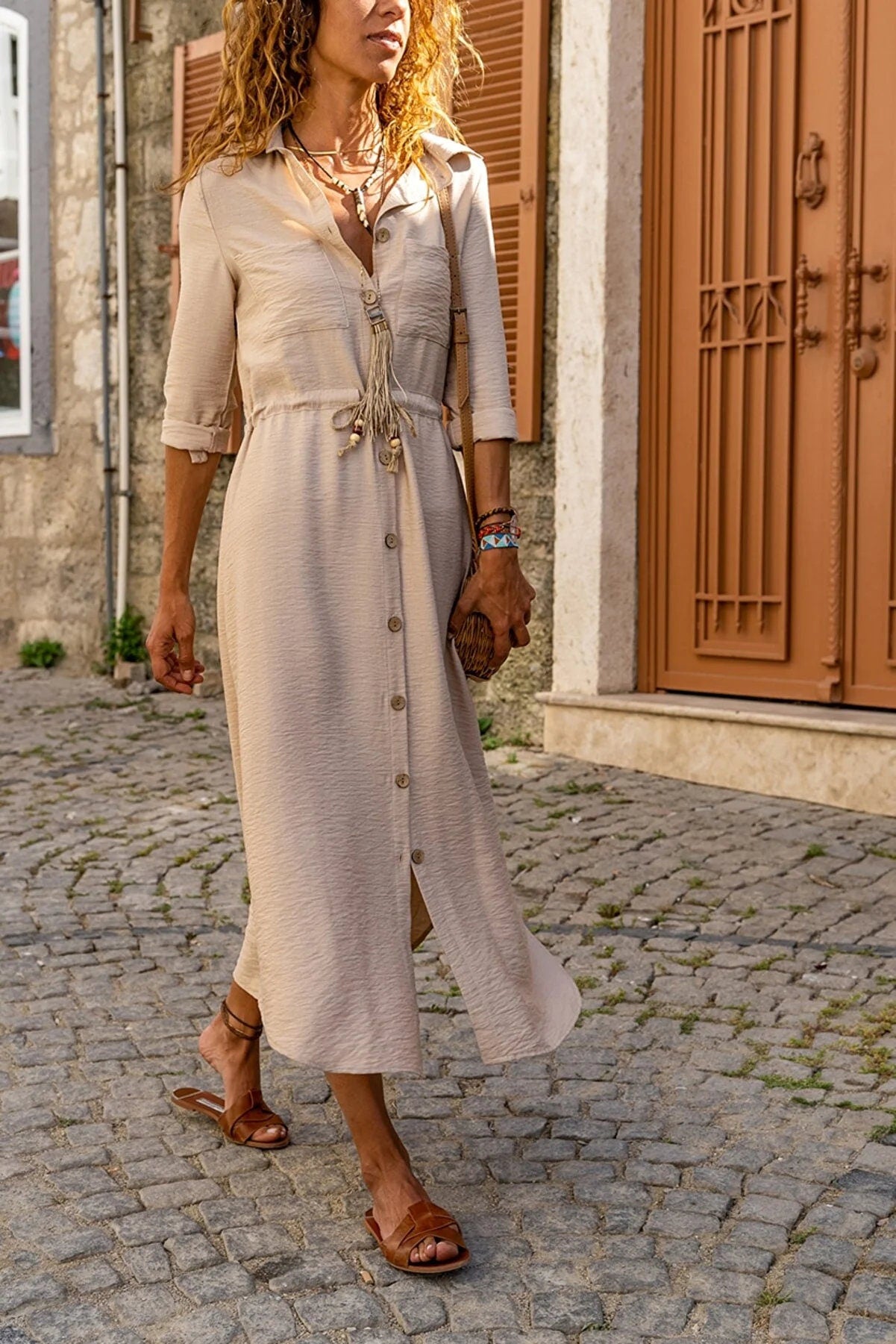
maxi dress with button down shirt Linen Waist Pleated Straw Belt Vintage Shirt Dress,With Pocket Short S –  puresunlady
SKU: 39795319939
maxi dress with button down shirt

maxi dress with button down shirt Linen Waist Pleated Straw Belt Vintage Shirt Dress,With Pocket Short S – puresunlady

Sale price$20.38 Regular price$22.64
Save 10%
Size: 4

Pay in installments of $5.66 with ShopPay, AfterPay and Klarna

Shipping Estimate
USA
  • USA
  • CAN

Ships within 48 hours · Estimated delivery Jun 29 - Jul 4

Promo Codes Available:

For Your Every Summer RSVP, with Code: SUMMER15

Description

maxi dress with button down shirt Linen Waist Pleated Straw Belt Vintage Shirt Dress,With Pocket Short S – puresunladyMinimalist & Affordable Women's Dress 50% Linen 50% Cotton Linen is a natural fiber made from the fibers of the flax plant. It is often used in clothing due to its several benefits, including: Comfort: Linen is a lightweight, breathable fabric that is comfortable to wear, even in warm weather. Absorbency: Linen is highly absorbent, making it a good choice for clothing that needs to be functional, such as kitchen aprons and napkins. Hypoallergenic:

Minimalist & Affordable Women's Dress

50% Linen 50% Cotton

✨Linen is a natural fiber made from the fibers of the flax plant. It is often used in clothing due to its several benefits, including:

✨Comfort: Linen is a lightweight, breathable fabric that is comfortable to wear, even in warm weather.

✨Absorbency: Linen is highly absorbent, making it a good choice for clothing that needs to be functional, such as kitchen aprons and napkins.

✨Hypoallergenic: Linen is hypoallergenic, meaning it is less likely to cause skin irritation or allergic reactions, making it a good choice for people with sensitive skin.

✨Durability: Linen is a strong and durable fabric that can withstand frequent wear and tear, making it a good choice for everyday clothing, such as linen pants and shirts.

✨Versatility: Linen is available in a variety of weights, textures, and finishes, making it a versatile choice for many different applications, such as bedsheets, tablecloths, and curtains.

✨Sustainable: Linen is a renewable resource and can be grown without the use of harmful chemicals, making it a more sustainable choice than synthetic fibers.

✨Elegance: Linen has a natural texture and a sophisticated, elegant appearance, making it a popular choice for formal clothing, such as linen suits and dresses.

✨Cooling: Linen has a natural cooling effect, making it a good choice for clothing that needs to keep you cool, such as summer dresses and shorts.

✨Absorbent: Linen is highly absorbent, making it a good choice for clothing that needs to be functional, such as towels and washcloths.

✨Model Measurements: Height: 1.70, Bust: 83, Waist: 64, Hips: 90, Size: S/36/1

✨✨✨✨✨✨✨✨✨✨✨✨✨✨✨✨✨✨✨✨✨✨✨✨✨✨✨✨✨✨✨✨✨✨✨✨✨✨✨✨✨✨

✨Cotton is a natural fiber that is often used in clothing due to its several benefits, including:

✨Comfort: Cotton is a soft and breathable fabric that is gentle on the skin, making it a popular choice for everyday clothing, such as t-shirts, underwear, and pajamas.

✨Absorbency: Cotton is highly absorbent, making it a good choice for clothing that needs to be comfortable and functional, such as towels, washcloths, and sweat-wicking athletic wear.

✨Hypoallergenic: Cotton is hypoallergenic, meaning it is less likely to cause skin irritation or allergic reactions, making it a good choice for people with sensitive skin.

✨Easy Care: Cotton is easy to care for and can be machine washed and dried without shrinking or losing shape.

✨Durability: Cotton is a strong and durable fabric that can withstand frequent wear and tear, making it a good choice for everyday clothing.

✨Versatility: Cotton is available in a variety of weights, textures, and finishes, making it a versatile choice for many different applications, such as denim, canvas, and muslin.

✨Sustainable: Cotton is a renewable resource and can be grown without the use of harmful chemicals, making it a more sustainable choice than synthetic fibers.

✨Cost-Effective: Compared to other natural and synthetic fibers, cotton is relatively inexpensive, making it an affordable choice for many people.


Introducing our Vintage Woman Dress, a beautiful and timeless piece that exudes effortless style and elegance. Made from high-quality cotton fabric, this dress is soft, breathable, and comfortable to wear, making it perfect for any occasion.

Featuring a classic and flattering A-line silhouette, this dress is designed to flatter all body types. The knee-length hemline and short sleeves make it perfect for both casual and formal events, while the intricate detailing adds a touch of vintage charm and elegance.

The vintage-inspired design is both unique and timeless, with a beautiful pattern that is both bold and elegant. The dress is designed to be versatile, making it easy to pair with a range of accessories and shoes, allowing you to create a wide range of stylish and sophisticated looks.

Whether you're attending a wedding, a cocktail party, or just running errands, this Vintage Woman Dress is the perfect addition to your wardrobe. It's easy to care for and maintain, and the high-quality materials ensure that it will last for years to come.

So why wait? Add this stunning and versatile dress to your collection today and start turning heads with your unique sense of style and sophistication

Made in Istanbul-Turkey, the capital of high quality textile and home of experienced artists.

Shipping Notes
  • Free Standard Shipping on $100+ Orders to the USA.
  • Except Preorder products are shipped in 48 hours.
  • Delivery to the USA:
  1. Standard Shipping : 3-10 business days
  • If time is of the essence, please consider selecting expedited delivery for faster service.
Exchange/Return Notes
  • We offer a 30-day return/exchange service after receiving.
  • Final sale items are not eligible for returns or exchanges.
  • To process your return/exchange, please contact us at [email protected]
  • Please click here for more details>>> Return & Exchange Policy
SKU: 39795319939

Discover Niche Categories That Outsell maxi dress with button down shirt

Top-Converting Item to Boost Your Average Order

4.2 ★★★★★
Based on 1684 reviews
Sort
Highest Rating
Newest First
Oldest First
Product Reviews
R
RSL
Carnegie, US
★★★★★ 3
DNF
Format: Kindle
I decided to read this based on another review here. I started skipping and couldn't finish it. The writing is good but the behavior of the MCs put me off at times. Our parents took us camping (not car camping) a lot through my teens and the lesson was, from my youngest age, if the excrement encounters the turbine, get your bearings, assess, make a plan, follow it -- no time for drama. There would always be time for a freakout once the situation was resolved. (And if it wasn't resolved, freaking out wouldn't be an option.) Apparently, neither Helen nor Lana were ever taught that lesson because there's plenty of drama, and I lost respect for them. Worse, the drama continues with this endless back and forth right up to the very last page. I actually blinked. I've read rushed endings before, but this took the cake. Overall, this is a portrayal of women that bugged me. It felt almost stereotype-y regarding being overly dramatic and unable to keep it together under stress. Maybe I just hit the bad parts, but I couldn't keep reading to find out, in case there were more, and the repeated drama after the rescue didn't give me hope. Please, Sapphic authors, can we have more books celebrating feminine resilience? Cara Malone has a pretty good one about a bunch of shipwrecked queer women. We need more of that, and less of this. I'm giving this book 3 stars because the writing is good and I didn't finish, so may have missed better parts.
WAS THIS REVIEW HELPFUL?YesReportShare
Reviewed in the United States on July 23, 2024
P
Verified Purchase
Paula Cappa Reviews
Louisville, US
★★★★★ 5
If you can only afford one craft book on Dialogue, this one is it.
Format: Hardcover
The art of dialogue. How does a writer get it just right to be effective, yet original, dramatic but not too dramatic, captivating and satisfying, and most important of all convincing? The thrust of this book is how McKee spends time on characterizations and the art of the subtext—vital to thrilling and effective dialogue. McKee explains how subtext works, the thinking behind it, shows you its most effective moments, why it works well or poorly, and gives you the tools to make it work. The result: amazingly clear insight. No kidding, if you want to fully understand subtext in dialogue and sharpen your skills, this is the writing book to get. Conflict in dialogue, turning points, even sentence designs techniques. McKee describes the “suspense sentence” and the “periodic sentence.” Because prose is a natural medium for storytelling, you will learn how Charles Dickens used ‘counter pointing exposition’ and its effectiveness for the reader. I hadn’t seen this kind of hook in writing before, hadn’t heard this term before. Very powerful technique; of course none of us writes like Dickens, but what an example on how to swoop the reader in. What’s one of the takeaways in Dialogue by Robert McKee? “Quality storytelling inspires quality dialogue.” Which inspires a read of McKee’s other remarkable craft book “Story”—a great companion read as both books belong on any serious writer’s bookshelf.
WAS THIS REVIEW HELPFUL?YesReportShare
Reviewed in the United States on July 28, 2016
B
Verified Purchase
Bookworm
Houston, US
★★★★★ 5
It's All Right Here. All of it.
Format: Hardcover
I shouldn't even be writing this review because doing so only creates my competition. I'm writing it for Robert McKee out of respect and love for him as one of the best instructors I've never met. I have both STORY and now, DIALOGUE in hardcover, on my Kindle, and the audio version (he narrates his books) in my headphones. I read it, I listen to it and take it with me when I travel. Sometimes I listen and read at the same time. Most nights I listen to the audio version in my sleep. In other words, I eat, sleep and breathe this book. I did the same thing with Story, his other book. I may go to my grave never fully comprehending the vast wealth of knowledge contained in these two books. That's OK. What I can tell you is this. With nothing but STORY as my guide, my very first screenplay took seven months and thirty-five drafts from start to finish. But. That screenplay became a Hallmark Movies and Mysteries feature film. The producers liked it so much they gave me another assignment. That one took six weeks, and they bought the first draft. I'm now working on my fifth script; this one is in the six-figure category, with five figures upfront just for the Treatment. And I owe it all to everything I've learned from studying Robert McKee, supplemented by what I learned from everyone else. Over the past thirty years, I’ve studied with forty plus instructors and highlighted hundreds of books and listened to dozens of recorded seminars. All that information is summed up and thoroughly explained in Robert McKee's two books STORY and now DIALOGUE. I won't live long enough to absorb everything he teaches. And I still study two hours a day as a warm up for my writing. I’d recommend Aaron Sorkin, Warner Hertzog, William Goldman (both Sorkin and McKee say he's the greatest), Blake Synder, Chris Vogler, Michael Hauge, William Akers, and anybody else you can find who’s willing to share their knowledge. Because you never know when a concept you didn’t realize you didn’t understand or needed is going to show up. Especially when presented from a different perspective. Having said that, if you are serious, and I mean dead serious, about becoming a working screenwriter, or any other kind of fiction writer for that matter, then you have no choice but to study McKee like your literary life depends on it. Buy the hardcover, buy the Kindle version, and buy the audio version of DIALOGUE and STORY. And supplement these two works with any other material that speaks to you. If you do this, you will become a first class screenwriter or novelist or playwright, because all three genres are only different ways of presenting a Story. If you can’t commit to this, unless you’re a genius or prodigy, you’re wasting valuable time which could be spent following your true life calling. But if your heart’s desire is to become a working writer, then sooner or later you’ll have to know everything in McKee’s two books. So, you might as well bite the bullet and jump in head first. It's all right here in STORY and DIALOGUE. All of it. Thank you, Mr. McKee. You, sir, changed my life.-- Jimmy Hager
WAS THIS REVIEW HELPFUL?YesReportShare
Reviewed in the United States on September 21, 2016
J
Verified Purchase
jk Smiles
New York, US
★★★★★ 5
A book on dialogue should be experienced first as a book on tape
Format: Audio CD
I think of this more as a great master class lecture. Dialogue should be seemingly simple (we all talk), but McKee defines its essence and differences for prose, stage and cinema. The bulk is narrated by McKee, but the scene examples are read by voice actors and they do quite well. Even the roots of the English language are examined in order to make better decisions on your character's particular use of words. After listening the 10 hours twice while commuting, I finally picked up the book and read it. The book on tape is a better way to initially absorb the material, while the actual book helps to clarify the info. A must for all writers, especially screenwriters.
WAS THIS REVIEW HELPFUL?YesReportShare
Reviewed in the United States on August 30, 2018
L
Verified Purchase
Lori T. Sly
Alexandria, US
★★★★★ 4
Helpful, but not as good as "Story" by same author, and it disses certain genres
Format: Hardcover
This book contains a lot of helpful information on how to write dialogue. It's dense with dialogue analysis and insights, tough to take in by just reading it through once. But it is helpful. McKee covers the three dialogue tiers (said, unsaid, unsayable) as well as how dialogue ties into story turning points and scene conflict type. I still have lots of practice ahead of me to figure out how best to do this in my story. I will definitely use his advice as a guide. He understands dialogue at a much deeper level than I do. However, many of McKee's dialogue examples did not speak to me. While I liked reading the dialogue examples for Breaking Bad, 30 Rock, The Sopranos, Frasier, A Raisin in the Sun, and The Great Gatsby, and agreed they were good, I disliked the dialogue from Shakespeare, Elmore Leonard, Sideways, Fraulein Else, and Lost in Translation. McKee says fine dialogue turns the reader/audience into a mind reader; I guess I'm not interested in movies which expect me to be as much of a mind reader as those latter examples did. I totally missed the subtext of the dialogue in those until he explained it to me as an aside. And that's after I already saw most of those movies! If I have to guess what every character means with every line, that's too much work and too little entertainment for me. Maybe mystery lovers liked the dialogue in "Lost in Translation"; I'm not a mystery lover. McKee quoted one novelist as saying that the crux of good writing is to, "Make em laugh, make em cry, make em wait." Lost In Translation and its dialogue did none of that for me. The subtext was so confusing and subtle that I lost interest in the movie. I can't even remember what it was about anymore, only that it won some award and I had no clue why. McKee says that with rare exceptions, a scene should never be outwardly and entirely about what it seems to be about. Dialogue should imply, not explain, its subtext. An ever-present subtext is the guiding principle of realism. Nonrealism, on the other hand, employs on-the-nose dialogue in all its genres and subgenres: myth and fairytale, science fiction and time travel, animation, the musical, the supernatural, Theatre of the Absurd, action/adventure, farce, horror, allegory, magical realism, postmodernism, dieselpunk retrofuturism, and the like. It's a bit unclear how, if at all, anyone writing in any of these "nonreal" genres should take his dialogue advice. It seems to me that even sci fi scenes need some good dialogue with subtext to be engaging. With McKee, all the accolades go to what is implied and unsaid over what is said. I agree that subtext matters, but for me, he's out of proportion with how much it matters to most people and how hard audiences are willing to work to discover the intended subtext. Also, memorable spoken character lines can elevate movie themes and characterization like nothing else. In the end, I think this book is geared more toward writers who want other advanced writers as their audience rather than the average reader or movie watcher. And McKee admits it is definitely not geared toward sci fi, fairytales/myths, action/adventure, horror or allegory. It's almost as if he's saying those genres can't have excellent dialogue. I disagree. But it was still a helpful book to read, and one I will be thinking about and trying to more fully understand for a long time. McKee understands how character's subconscious drives can deepen what they say or avoid saying, and how dialogue interacts with many other aspects of a story to make it all work together.
WAS THIS REVIEW HELPFUL?YesReportShare
Reviewed in the United States on December 12, 2019

recommand products